



In the global rice trade, the margin for error is razor-thin. For bulk rice importers, wholesalers, and food manufacturers, the difference between a premium shipment and a rejected cargo often comes down to one factor: Purity.
As we move further into 2026, traditional mechanical cleaning is no longer enough. The industry standard has shifted toward AI-driven color sorting technology. Here is how artificial intelligence is revolutionizing the journey from the paddy field to the export port, ensuring your shipments meet the strictest international standards.
The Challenge of Bulk Rice Quality Control
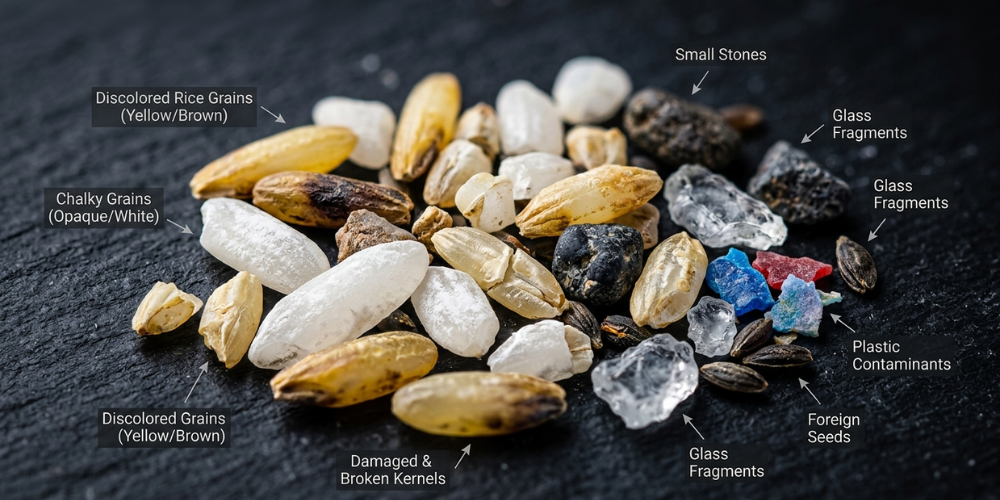
When dealing with high-volume rice exports (such as Long Grain White Rice, Jasmine, or Basmati), maintaining consistency across thousands of tons is a logistical nightmare. Common contaminants that devalue a shipment include:
Discolored grains: Yellow, chalky, or peck grains.
Foreign materials: Glass, stones, plastic, or seeds from other plants.
Damaged kernels: Broken or immature grains that affect cooking consistency.
For a rice distributor, even a 1% impurity rate can lead to brand damage, financial penalties, or total rejection by customs in markets like the EU, USA, or Middle East.
How AI-Driven Color Sorters Work
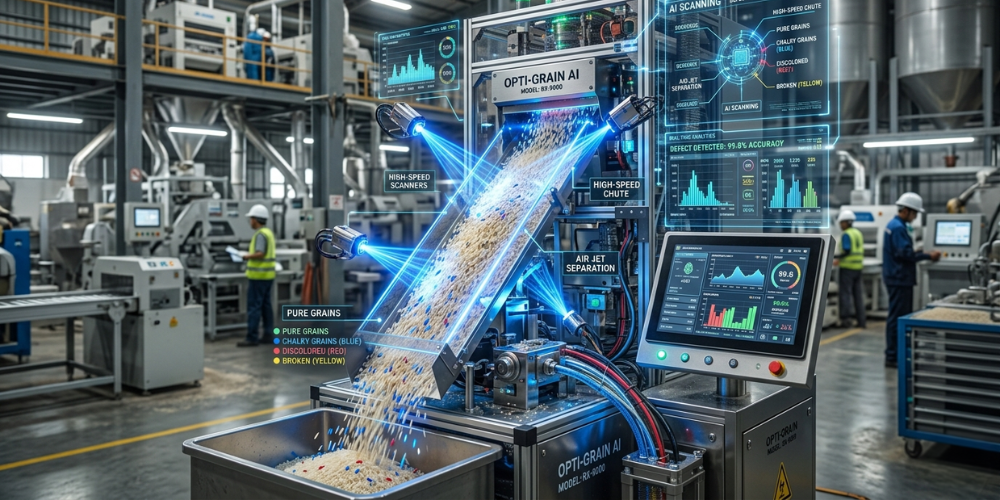
Modern Rice Color Sorters (Optical Sorters) act as the final “gatekeeper” before bagging and container loading. Unlike older models that relied on simple monochromatic cameras, today’s AI systems utilize:
1. Multi-Spectral Imaging
Using Full-color RGB cameras and Infrared (IR) sensors, the machines “see” beyond what the human eye can. They can distinguish between a white rice grain and a translucent piece of glass or a white plastic shard that weighs exactly the same.
2. Deep Learning Algorithms
The AI is trained on massive datasets to recognize the “perfect grain.” It can differentiate between a natural variance in a Jasmine grain and a defect caused by heat damage or moisture.
3. Precision Ejection
Once a defect is identified, high-speed air nozzles “shoot” the impurity out of the stream with surgical precision.
Key Metric: Modern AI sorters can process up to 15-20 tons per hour per machine while maintaining a 99.99% purity rate.
Why Importers Should Demand AI-Sorted Rice
If you are a global rice trader or procurement manager, sourcing rice processed via AI color sorting offers three distinct competitive advantages:
1. Guaranteed Compliance with International Standards
Whether it’s the Codex Alimentarius or specific SGS/Bureau Veritas inspections, AI sorting ensures your bulk cargo meets the “Grade A” specifications required for premium retail packaging.
2. Reduced Waste and Optimized Costs
AI sorters have a much lower “carry-over” rate (accidentally rejecting good grains with the bad). For a bulk buyer, this means more usable product per ton and better price-to-quality ratios.
3. Enhanced Shelf Life and Food Safety
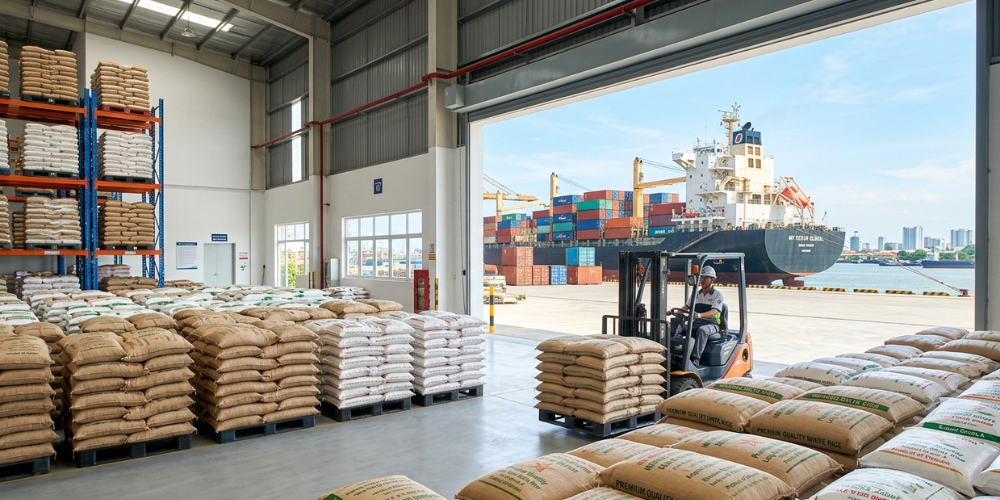
By removing organic contaminants and damaged grains that are prone to mold, the overall shelf stability of the shipment increases—a critical factor for long-distance sea freight lasting 30-45 days.
Summary: The Future of Rice Procurement
The journey From Paddy to Port is fraught with risks, but technology is closing the gap. For businesses looking to import rice in bulk, the focus must remain on supply chain transparency and the technology used at the milling stage.
At a Glance: AI Sorting vs. Traditional Methods
Partner with the Right Supplier
When negotiating your next Rice Purchase Order (PO), don’t just ask about the price per metric ton. Ask about the sorting technology. Ensure your supplier utilizes the latest AI-driven optical sorters to protect your investment from the paddy to the final port of destination.
Are you looking to source high-purity, AI-sorted rice for your distribution network? Contact our export team today for a technical specification sheet.
Learn more here: Top Rice Production Regions in Vietnam for High-Volume B2B Importers