



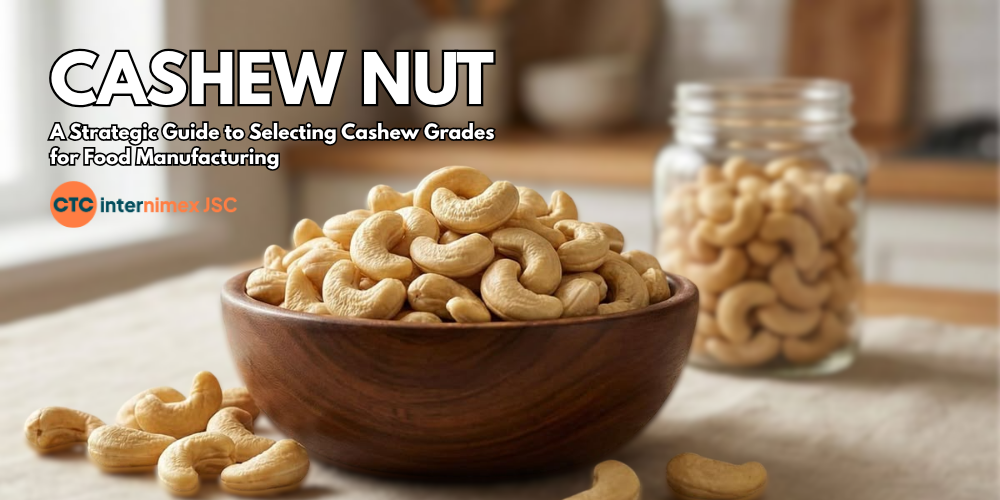
In the global food supply chain, selecting the right cashew grade is a critical decision that impacts both product quality and profit margins. For food processing plants and international trading companies, understanding the nuances of the AFI (Association of Food Industries) standards is essential for optimizing production efficiency and cost-effectiveness.
1. Understanding Cashew Grading: The Global Standard
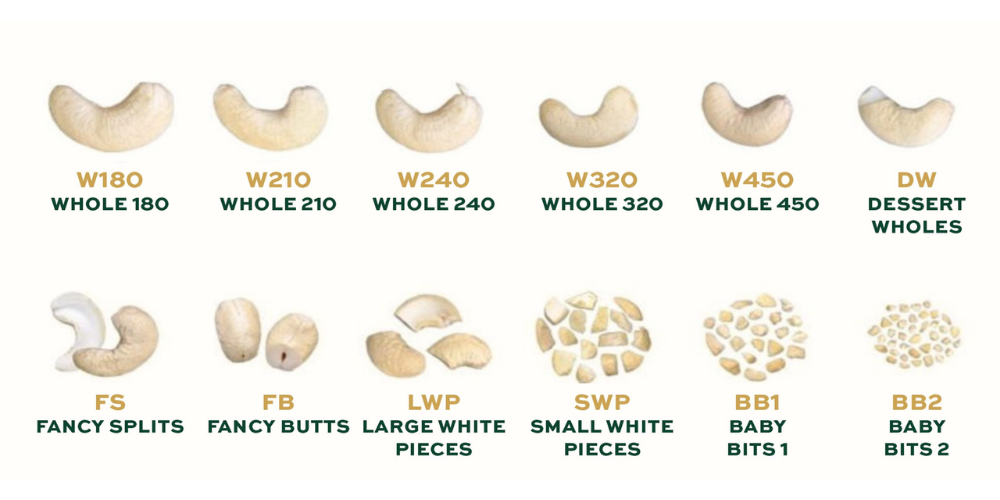
Cashew kernels are categorized by color, shape, and size. The grading code typically consists of a letter (indicating appearance) and a number (indicating the count per pound).
Core Grade Classifications:
| Grade | International Designation | Kernels per lb | Industrial Applications |
| W180 | King of Cashews | 170 – 180 | Luxury gifting, premium retail packs, Middle Eastern markets. |
| W240 | Jumbo Whole | 220 – 240 | High-end snacks, honey-roasted or chocolate-coated cashews. |
| W320 | Standard Whole | 300 – 320 | The “Industry Gold Standard.” Most widely used for retail snacking. |
| WS / LP | Splits / Large Pieces | N/A | Bakery toppings, granola, muesli, and confectionery filling. |
| SP / SWP | Small White Pieces | N/A | Raw material for Cashew Milk, Nut Butter, and vegan protein bars. |
2. Strategic Sourcing for Food Processing Lines
Choosing “the biggest nut” isn’t always the smartest economic move. Procurement managers should align the cashew grade with the specific final application:
For Confectionery & Chocolate Industries
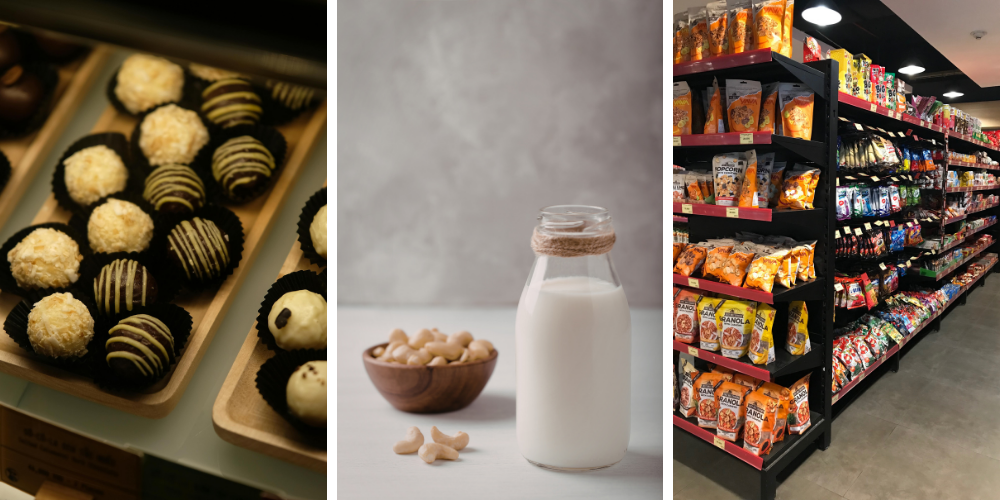
If the cashews are to be enrobed in chocolate or crushed as a topping, sourcing Large Pieces (LP) or Splits (WS) is highly recommended. Using “Whole” kernels in these processes increases costs without adding value to the consumer’s sensory experience.
For Plant-Based Dairy (Cashew Milk & Butter)
Cashew milk requires high fat content and a clean white color. Small White Pieces (SWP) or Baby Bits (BB) are the optimal choices. They grind easily, emulsify well, and cost 30-50% less than whole kernels, significantly lowering your COGS (Cost of Goods Sold).
For Retail Snacking Brands
For brands targeting supermarket shelves, W320 and W450 offer the perfect balance between aesthetic appeal and ingredient cost.
3. Critical Technical Specifications for Importers
When sourcing Bulk Cashews from Vietnam, ensure your contract specifies the following quality parameters to meet international food safety standards:
Moisture Content: Max 5%. Critical for preventing mold and ensuring a long shelf life.
Admixture: Max 0.01%. Essential for protecting automated processing machinery.
Broken Rate: For “Whole” orders, the broken rate should typically be under 5%.
Certifications: Demand HACCP, ISO 22000, BRC, or IFS. Compliance with Aflatoxin limits is non-negotiable for EU and US markets.
4. Why Source from Vietnam?
Vietnam is the world’s leading Cashew Nut Exporter, offering unparalleled advantages for large-scale buyers:
Advanced Processing Technology: Modern machinery ensures high “White Rate” and minimal CNSL (Cashew Nut Shell Liquid) contamination.
Scalable Supply Chain: Ability to fulfill monthly contracts from a few containers (FCL) to hundreds of tons.
Strategic Logistics: Direct shipping routes from Cai Mep or Cat Lai ports to Europe, North America, and Asia.
Looking for a Reliable Bulk Cashew Supplier?
If you are seeking Premium Cashew Kernels at factory-direct prices with full export certification, contact us today for a formal quotation.
Learn more here: Vietnam Cashews: The Gold Standard for Global Health Food Brands