



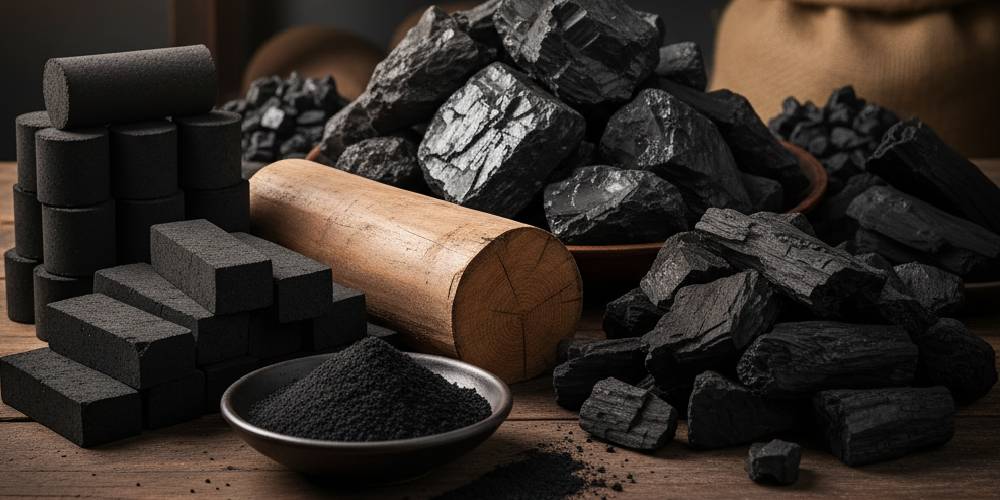
Choosing the right charcoal can be a make-or-break decision for a perfect BBQ, a clean industrial process, or a high-quality shisha experience. The market is flooded with options, from traditional wood to modern briquettes. So, what’s the real difference between coconut charcoal vs regular charcoal? This comprehensive guide will help you understand the pros and cons of each, allowing you to make an informed decision based on expert analysis.
Coconut Charcoal vs Other Types: An In-Depth Look at Purity and Performance
To truly understand which charcoal reigns supreme, we must look beyond a simple visual comparison. The answers lie in the raw materials, technical specifications, and the resulting performance.
Raw Materials & Production: The Difference is in the Source
The fundamental difference between charcoal types begins with their source. Coconut shell charcoal vs wood charcoal is a prime example of this. While traditional wood charcoal vs coconut charcoal often comes from hardwood trees, our product is made exclusively from a renewable agricultural byproduct: coconut shells. This distinction also applies to other types like bamboo charcoal vs coconut charcoal. While bamboo is also a fast-growing plant, coconut shells offer a unique density and composition, resulting in superior performance. This is the heart of a sustainable firewood export business.
Technical Specs & Burn Efficiency: The Numbers Don’t Lie
When comparing coconut shell charcoal vs hardwood charcoal, or any other type, the technical specs are the clearest indicators of quality.
- Fixed Carbon: The high fixed carbon content in our coconut shell charcoal (up to 65%) ensures a longer, more stable burn than most regular charcoal.
- Ash & Purity: A major selling point of our product is its low ash content (max 3%). Compare this to other charcoal types that often leave significant residue.
- Calorific Value: The high gross calorific value of over 7000 Kcal/kg means it produces more heat with less fuel.
- Burn Time: Products like coco nara coconut shell charcoal and our general coconut charcoal are known for their extended burn time, lasting for hours. This makes them a more cost-effective choice.
Pros, Cons, & Diverse Applications: Why Choose Coconut Shell?
Each type of charcoal has its applications, but charcoal made from coconut shells offers a distinct set of advantages. It’s virtually smokeless, odorless, and burns evenly, which makes it an ideal choice for a clean barbecue or a pristine shisha session. While some products like coconut coals vs quick light may take a moment longer to light, the superior, long-lasting quality and pure flavor it delivers are worth the wait. It’s a great choice for both personal use and a professional coconut shell charcoal plant.
Expert’s Verdict: Which Is The Best?
For those asking, “Is coconut charcoal better than wood charcoal?” the answer is a resounding yes for those who prioritize sustainability, purity, and performance. Products like coconut shell charcoal briquettes and our natural lump charcoal offer all the benefits of high-quality fuel without the environmental cost of traditional methods. For commercial or large-scale use, this is a game-changer.