


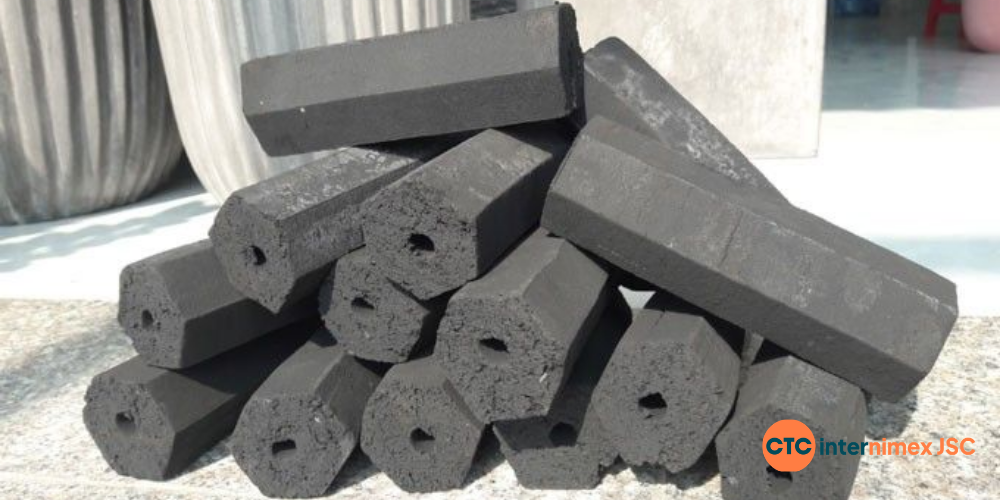
Restaurant-Grade Fuel for Global Importers
In the global BBQ and restaurant industry, fuel consistency directly impacts cooking performance, customer satisfaction, and operational costs.
Many importers face recurring challenges:
Inconsistent heat: Unpredictable temperatures that ruin cooking precision.
Heavy smoke: Creating an unpleasant atmosphere and clogging ventilation systems.
High ash content: Compromising food hygiene and increasing cleanup costs.
High breakage: Brittle charcoal leads to excessive dust and waste during shipping.
Unstable supply: Inconsistent capacity that disrupts long-term restaurant contracts.
Leveraging Vietnam’s abundant coconut resources and controlled production systems, CTC Internimex supplies export-grade Coconut Shell BBQ Charcoal engineered specifically for professional restaurant chains and international distributors.
Vietnamese Coconut BBQ Charcoal Highlights
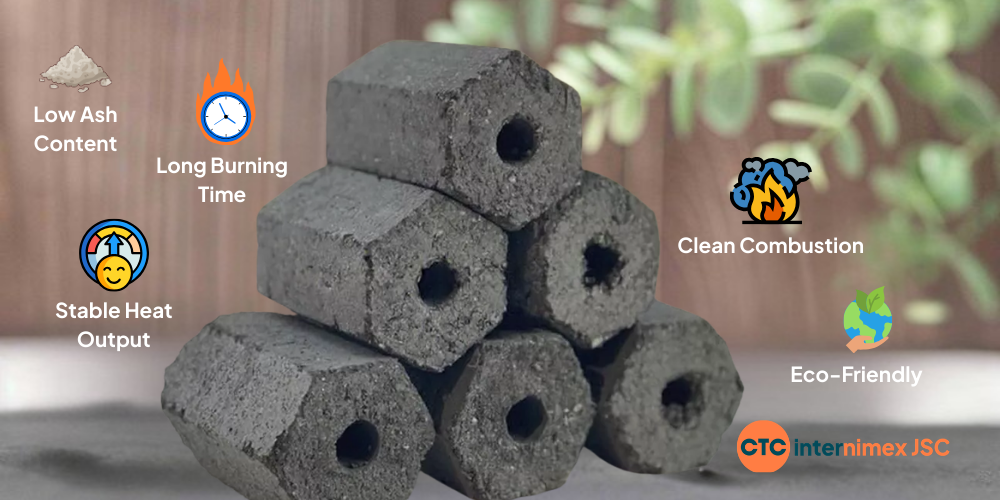
Steady Heat: High-efficiency burning at 5,000 – 6,000 kcal/kg, ideal for consistent grilling performance.
Long Burning Time: Lasts between 3 – 5 hours, lasting 3 times longer than regular wood charcoal.
Low Ash Content: Under 5% ash, ensuring a clean grill and preventing dust from sticking to food.
Clean & Safe: Strictly smokeless, odorless, and spark-free, perfect for indoor and premium dining.
Eco-Friendly: Made from 100% upcycled coconut shells—deforestation-free and carbon-neutral.
Engineered for Professional Grilling Performance
Unlike traditional wood charcoal, our coconut shell BBQ charcoal is designed for commercial restaurant environments.
1. Pure & Safe Raw Material
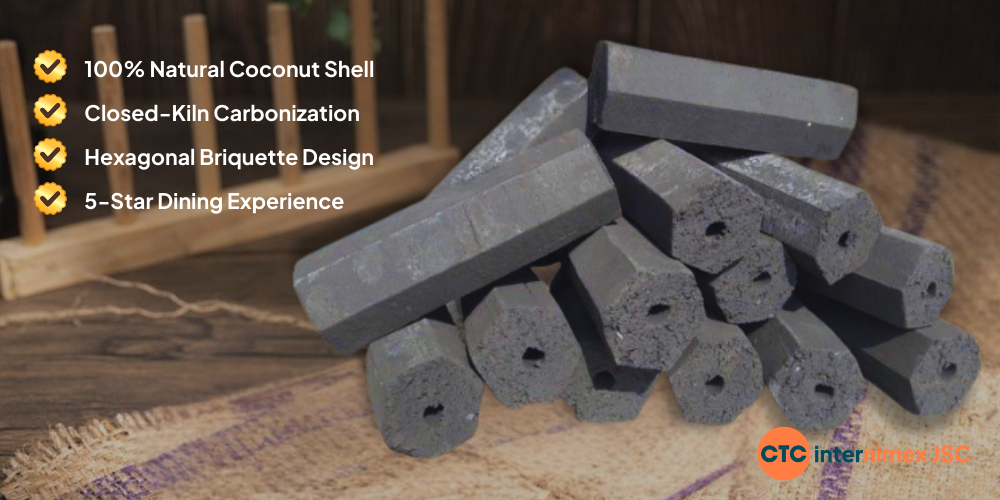
- 100% Natural Coconut Shell: Sustainably sourced from Vietnam’s top coconut regions. A renewable, eco-friendly alternative to wood charcoal that prevents deforestation.
- Zero Chemicals & Additives: No accelerants or artificial binders. We use only natural starch, ensuring no toxic fumes and zero chemical aftertaste on your food.
- Food-Grade Safety: Our production strictly meets international health standards, protecting both the chef’s respiratory health and the diners’ experience.
- Eco-Conscious: A carbon-neutral energy source that turns agricultural waste into high-value fuel.
2. Key Performance Characteristics
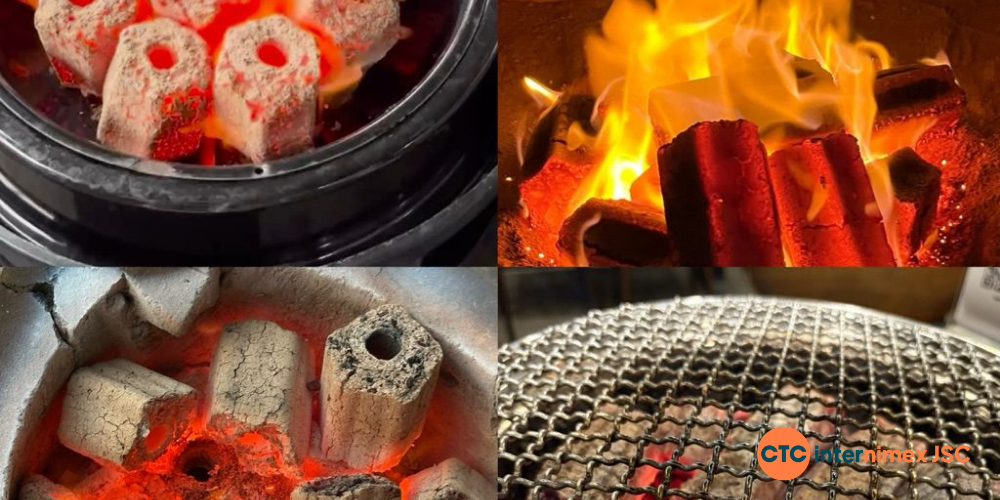
🔥 High and stable calorific value: Provides consistent heat output throughout the grilling process.
🌫 Low smoke performance: Suitable for indoor restaurant environments.
🧹 Low ash content (<15%): Easy to clean after use, helping reduce maintenance time.
💪 Hard and durable structure: Resistant to breakage during handling and long-distance transportation.
🌱 Eco-friendly: Made from renewable agricultural by-products.
Production Technology: The Difference Between “Standard” and “Export-Grade”
We depart from traditional earth-kiln methods. CTC Internimex utilizes advanced Closed-Kiln Pyrolysis Technology to ensure absolute control over the final product’s quality and purity.
Technical Specifications
CTC Internimex products are strictly tested by SGS/Vinacontrol to ensure compliance for demanding markets such as Japan, Korea, Russia, and the Middle East.
| Technical Parameter | Guaranteed Specification | Practical Benefits |
|---|---|---|
| Raw material | 100% Vietnamese coconut shell | Sustainable and eco-friendly fuel |
| Calorific value | >5000 cal/g | High heat output for grilling |
| Fixed Carbon | 60–70% | Standard carbon concentration |
| Ash content | < 15% | Reduced cleaning after use |
| Moisture | < 10% | Easy ignition and stable burning |
| Packaging | 10kg/20kg cartons (PE lined) |
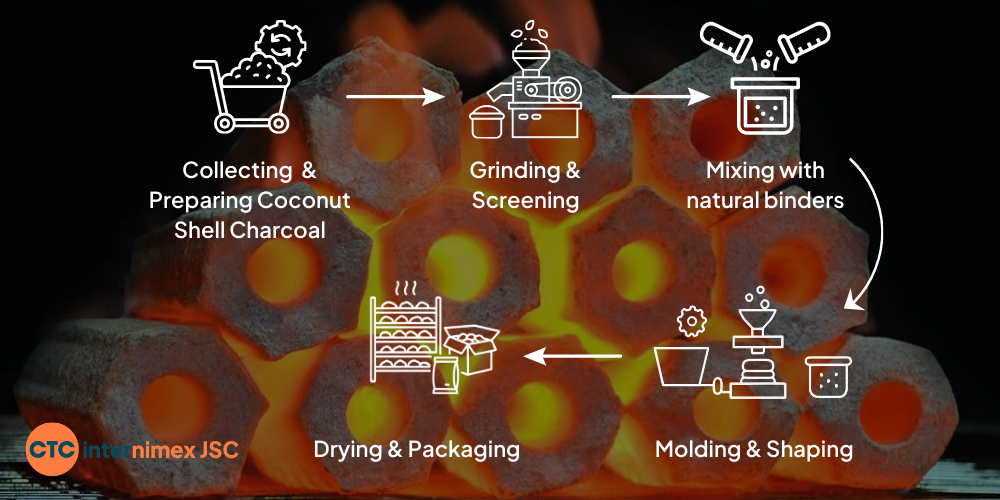
Coconut Shell BBQ Charcoal Production Process
Step 1: Raw Material Collection & Cleaning
- 100% mature, naturally dried coconut shells are selected (moisture <15%).
- All fibers, sand, and impurities are removed.
- Mature shells provide higher carbon content, resulting in stronger and more durable charcoal.
Step 2: Carbonization (Raw Charcoal Processing)
- Coconut shells are carbonized in closed kilns (steel or brick kilns) at 400–600°C under low-oxygen conditions.
- This process produces raw charcoal in natural broken pieces, not yet uniform in size.
Step 3: Grinding
- After complete cooling, raw charcoal is ground into fine, uniform powder.
- This ensures dense briquettes, longer burning time, and reduces sparking or cracking during use.
Step 4: Mixing with Natural Binder
- Charcoal powder is mixed with 3–5% natural starch (cassava or corn starch).
- No chemical additives are used.
- Industrial mixers ensure even distribution for consistent binding strength.
Step 5: Briquette Forming
- The mixture is compressed under high pressure into hexagonal, cylindrical, or pillow-shaped briquettes.
- A central airflow hole improves ignition and ensures even burning from the inside out.
Step 6: Drying
- Briquettes are dried at 80–100°C for 24–48 hours.
- Target moisture level: below 8–10% to reduce smoke and stabilize burning performance.
Why Choose Vietnam’s Coconut Shell Charcoal?
1. Global Quality (ISO)
Consistency: ISO 9001:2015 standards ensure every batch meets strict size and thermal specs.
Safety: Full compliance with international shipping and storage safety protocols.
2. Trade Edge (EVFTA)
0% Import Tax: European partners gain a massive price advantage via the EVFTA.
Market Entry: Meets strict “Green Standards” for high-end EU retail chains.
3. Optimized Logistics
Direct Sourcing: Plants in Ben Tre/Tra Vinh slash inland costs and ensure fresh supply.
Fast Shipping: Proximity to deep-sea ports (Cai Mep, Cat Lai) cuts lead times to the US, Japan, and Middle East.
4. Stable Supply Chain
Massive Capacity: 180,000 ha of plantations ensure year-round supply for large industrial orders.
Price Control: Self-sufficiency guarantees stable pricing despite market volatility.
5. Superior Performance
Extreme Heat: 5000 kcal/kg.
Clean Burn: Ultra-low ash (<15%) for pure flavor and cleaner equipment.
Efficiency: Lasts 4–6 hours—double the life of traditional wood charcoal.
Learn more here: Vietnam BBQ Charcoal Export: Organic, K-BBQ Quality