
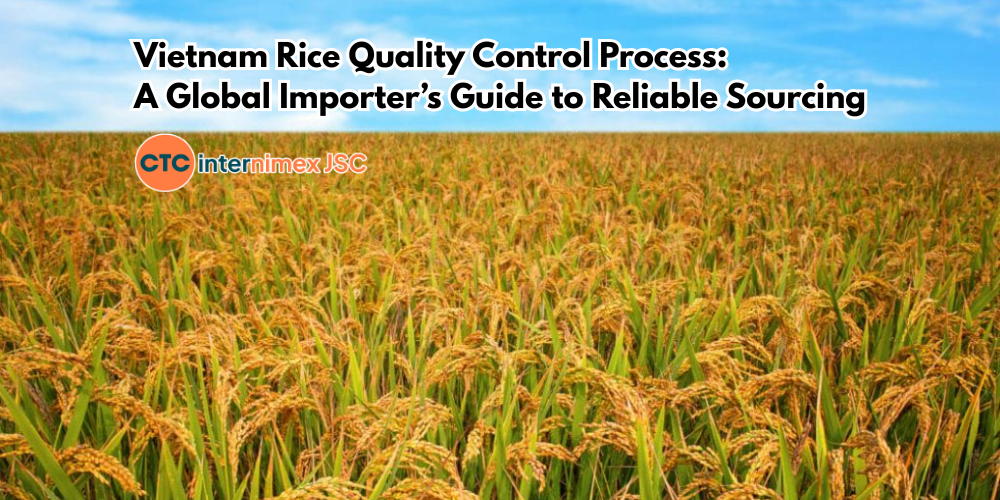
In the global agro-commodity market, importing rice in bulk from Vietnam offers immense competitive advantages in terms of price and variety. However, for a procurement director, the real challenge isn’t just the price—it’s the arrival quality.
At CTC Internimex, we understand that a single container of moldy or infested rice can damage your reputation and bottom line. That is why we have engineered a 7-Step Rice Quality Control (QC) Process to ensure that every grain of Vietnamese Jasmine, DT8, or Long Grain White Rice you receive meets the highest international standards.
1. Selective Sourcing & Raw Material Audit
Quality starts at the field. We don’t just buy from any mill. Our QC team audits and selects mills in the Mekong Delta that utilize:
New Crop Integrity: Ensuring only the latest harvest is processed to maintain aroma and texture.
Milling Degree: Checking that the husking and polishing processes meet the specific “well-milled” or “double-polished” requirements of your market.
2. Technical Lab Testing (Moisture & Purity)
Before a single bag is filled, we conduct rigorous lab tests:
Moisture Control (<14%): This is the “Safety Threshold.” Keeping moisture under 14% is non-negotiable to prevent mold and heat damage during long sea transits (30-45 days).
Purity Verification: For premium varieties like Jasmine or ST25, we ensure a 95%-100% purity rate, preventing the mixing of lower-grade white rice.
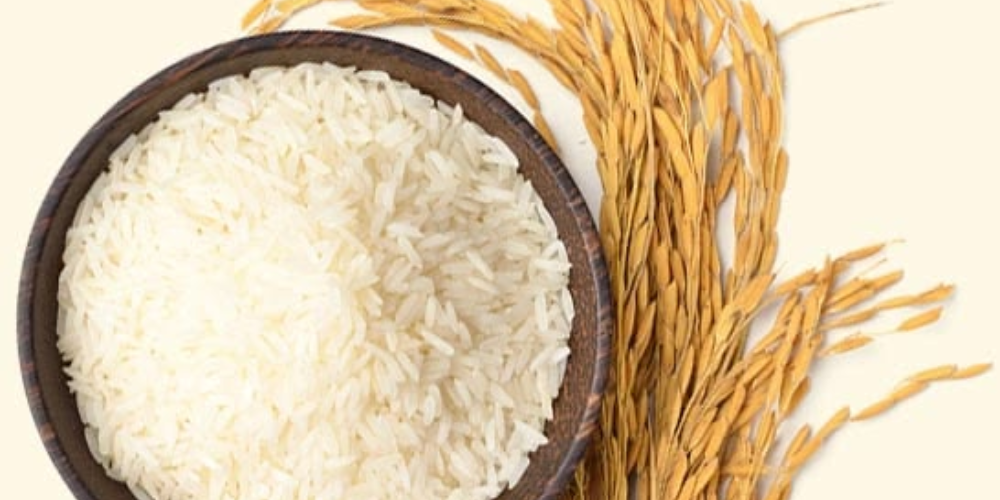
3. Optical Sorting & Impurity Removal
Modern international buyers demand clean, uniform grains. Our partner mills are equipped with:
Color Sorters: To remove yellow, chalky, or damaged kernels.
Magnetic Separators: To eliminate stones, dust, or metal fragments.
Size Grading: Utilizing high-precision sifting to ensure the percentage of “Broken” (5%, 15%, or 25%) is exactly as per the contract.
4. Professional Fumigation & Pest Management
Infestation is the biggest risk in bulk rice trade. CTC Internimex coordinates with world-class fumigation agencies (such as FCC or VFC) to apply:
Standard Treatment: Using Methyl Bromide or Phosphine according to your country’s phytosanitary requirements.
Pre-shipment Quarantine: Ensuring that every container is sealed and treated for 48–72 hours to eliminate all live insects, larvae, and eggs.
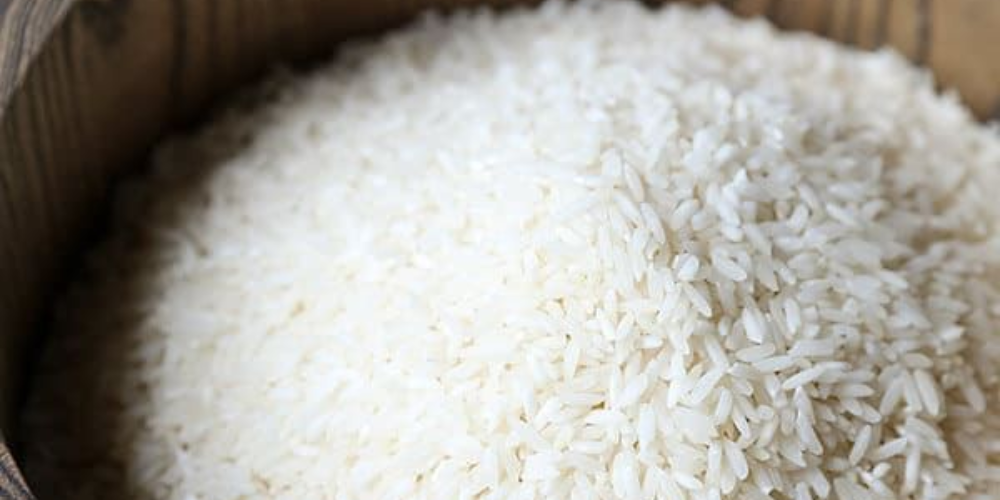
5. Independent Third-Party Inspection (SGS, Bureau Veritas)
To give our clients 100% confidence, we offer independent oversight. Before the container is sealed, recognized inspectors like SGS, Intertek, or Bureau Veritas perform:
Sampling: Random samples are taken to verify the grade, length, and broken percentage.
Weight Check: Ensuring the net weight of every bag matches the packing list.
6. Container Inspection & Secure Loading
A dirty or leaky container can ruin a perfect batch of rice. Our logistics team inspects:
Dryness & Odor: Ensuring the container is free of holes, rust, or strong odors from previous cargo.
Kraft Paper Lining: We use heavy-duty Kraft paper lining to prevent “container sweat” (condensation) from reaching the bags.
7. Strategic Documentation for Duty Optimization
The process ends only when your cargo clears customs smoothly. We specialize in providing accurate:
Certificate of Origin (Form EUR.1, CPTPP, RCEP): To help you enjoy 0% or preferential import duties.
Phytosanitary Certificates: Official government documents proving the rice is safe and pest-free.
💎 Why Partner with CTC Internimex for Bulk Rice Imports?
As a professional Strategic Sourcing Partner, we act as your “Eyes on the Ground” in Vietnam. While direct mills focus on production volume, CTC Internimex focuses on Risk Mitigation.
Consistency: We ensure Batch A is exactly like Batch B.
Transparency: You receive real-time QC reports and photos of the loading process.
Accountability: We stand by our contracts and handle logistics hurdles so you can focus on selling.
🚀 Elevate your supply chain with the most reliable Vietnam rice export solutions.
Learn more here: Rice Export Ethics: How Vietnam is Building Long-term Trust with Global Buyers